Automatic Cylinder UV Printer for 360° Production
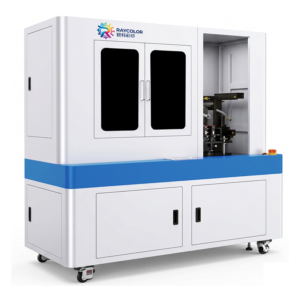
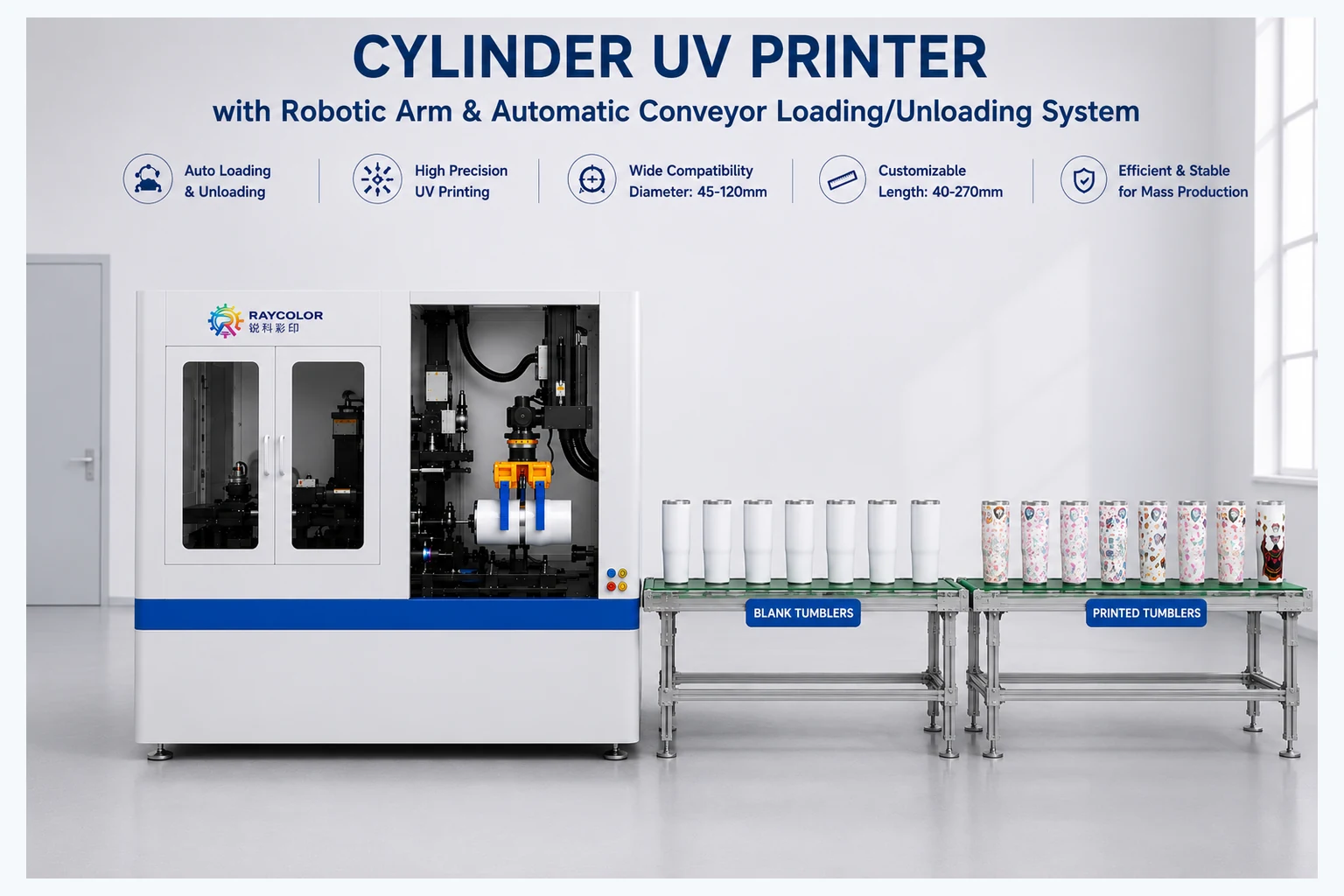
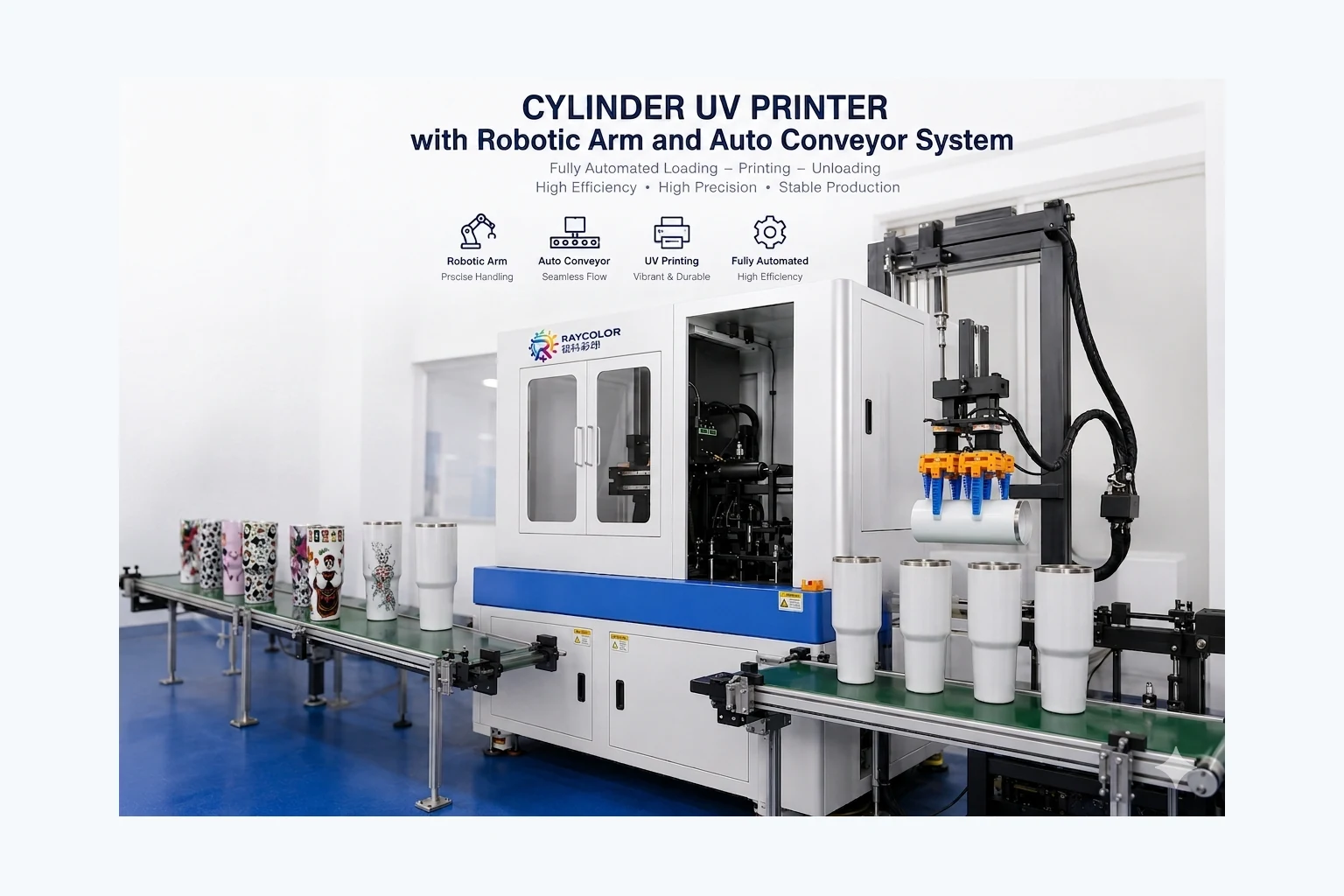
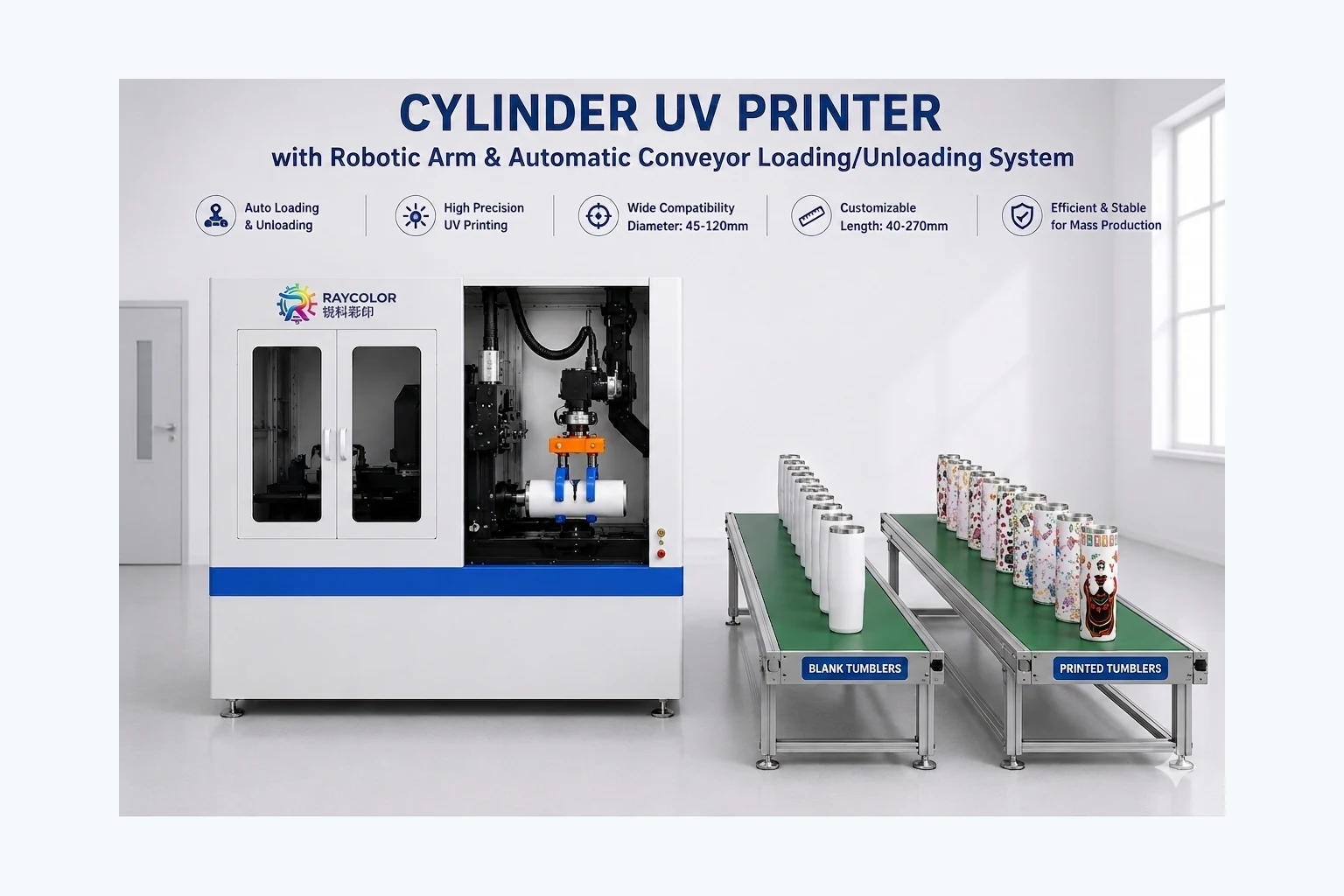
The Raycolor automatic cylinder UV printer combines Ricoh G6 printheads, robotic handling and configurable conveyor lines. It is designed for production teams that need repeatable loading, full-wrap printing and unloading of tumblers, bottles, cans and other tested cylindrical products. Compare it with our complete cylinder UV printer range before selecting a production configuration.
Why Choose an Automatic Cylinder UV Printer?
Key Specifications
| Category | Specification | Details |
|---|---|---|
| Print System | Printhead model | Ricoh G6 |
| Printhead quantity | 4-5 pcs | |
| Print resolution | 600 × 1800 dpi | |
| Ink drop | 5 pl | |
| Print speed | As fast as 30 seconds per tumbler, depending on artwork and settings | |
| Print mode | Color, white and varnish | |
| Ink configuration | C, M, Y, K, Lc, Lm, W, V | |
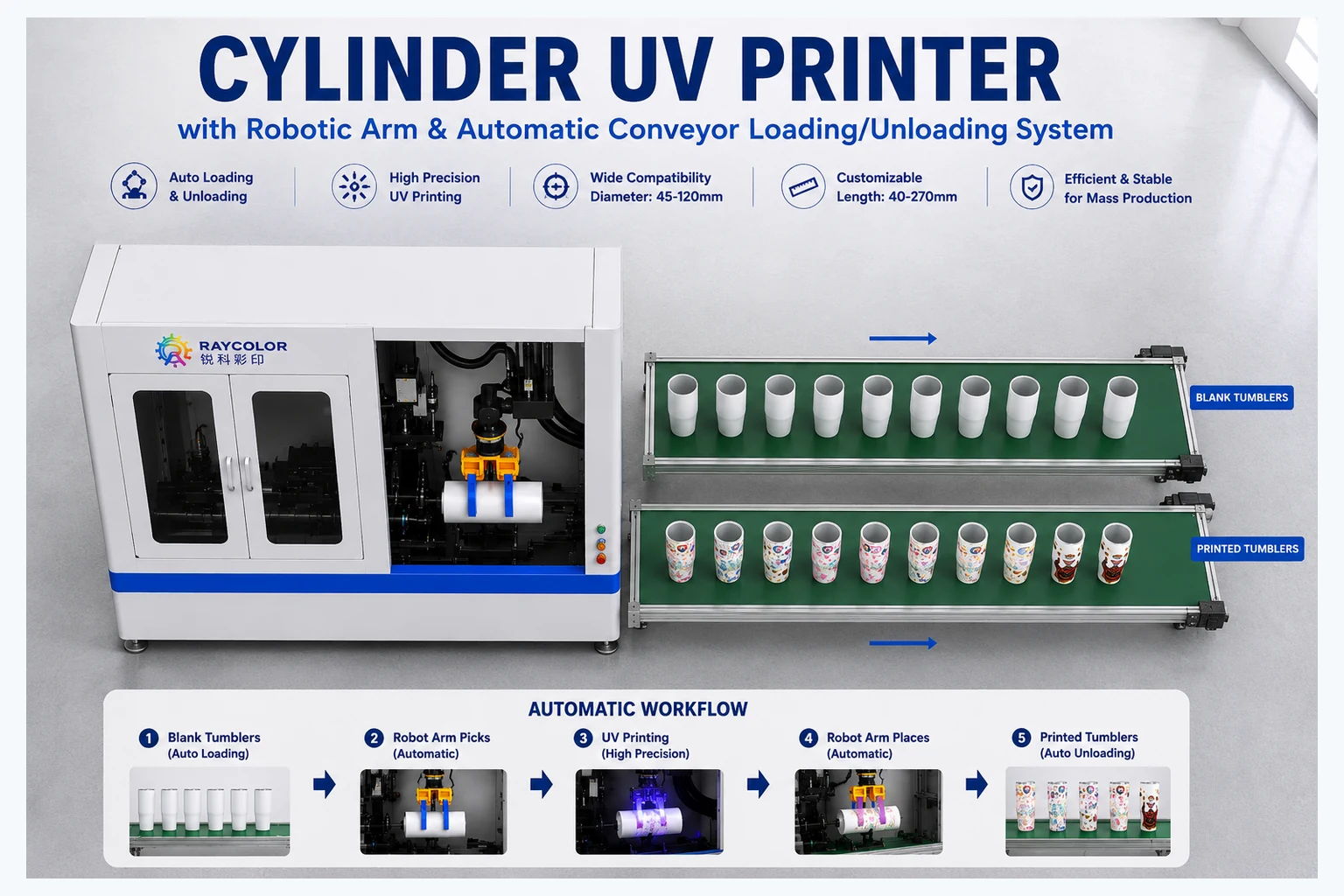
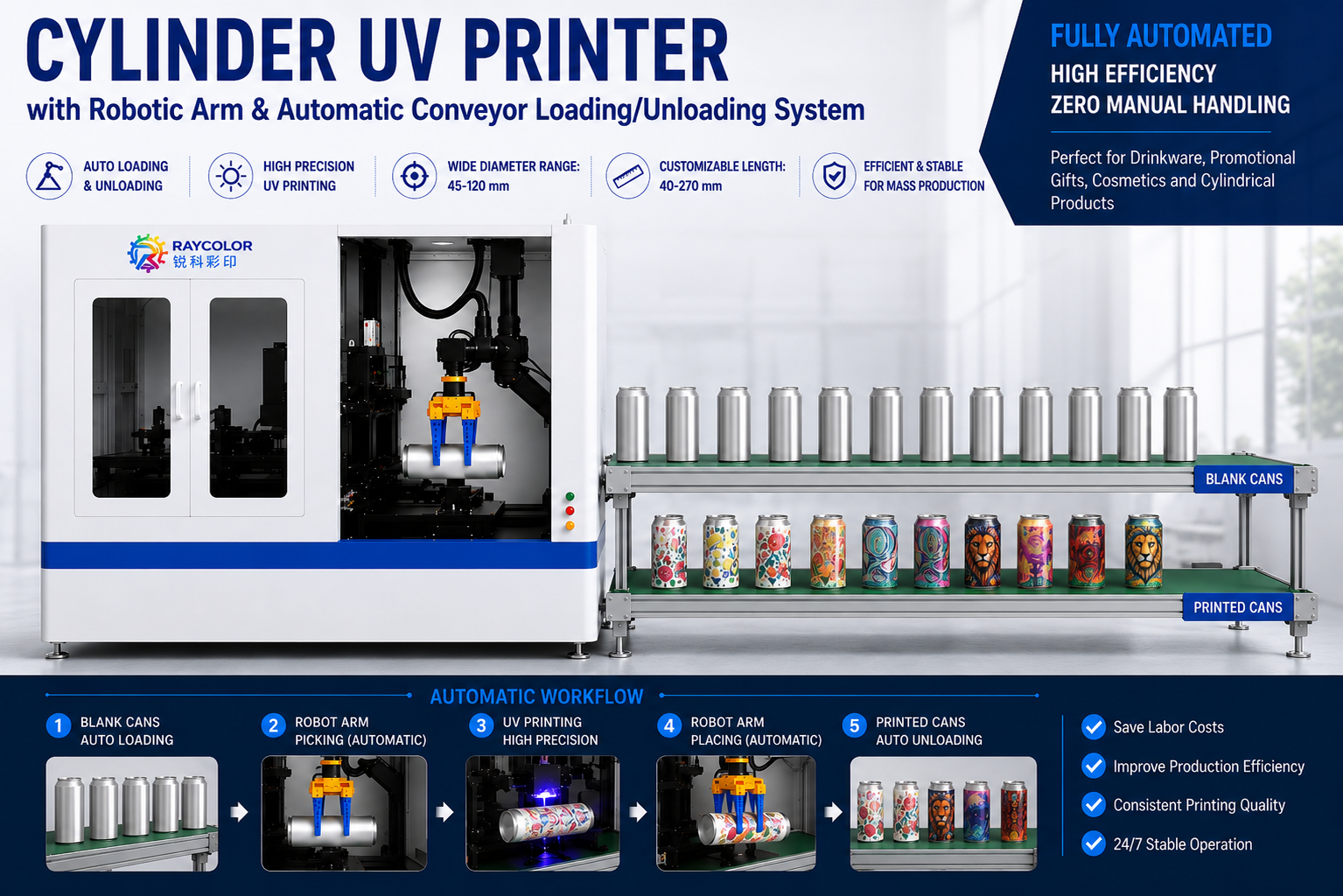
| Machine Parameters | Print diameter | 45-120 mm |
| Print length | 40-270 mm | |
| Print taper | 0-5° | |
| High-drop printing | 2-20 mm | |
| Curing system | LED UV lamp | |
| Cleaning system | Automatic positioning and cleaning system | |
| Ink | VOC-free UV-curable ink | |
| RIP software | RIIN | |
| File formats | TIFF, JPG, EPS, PDF, PNG, AI, PSD | |
| Data interface | Gigabit Ethernet | |
| Materials | Glass, metal, plastic, ceramics and more, subject to adhesion testing | |
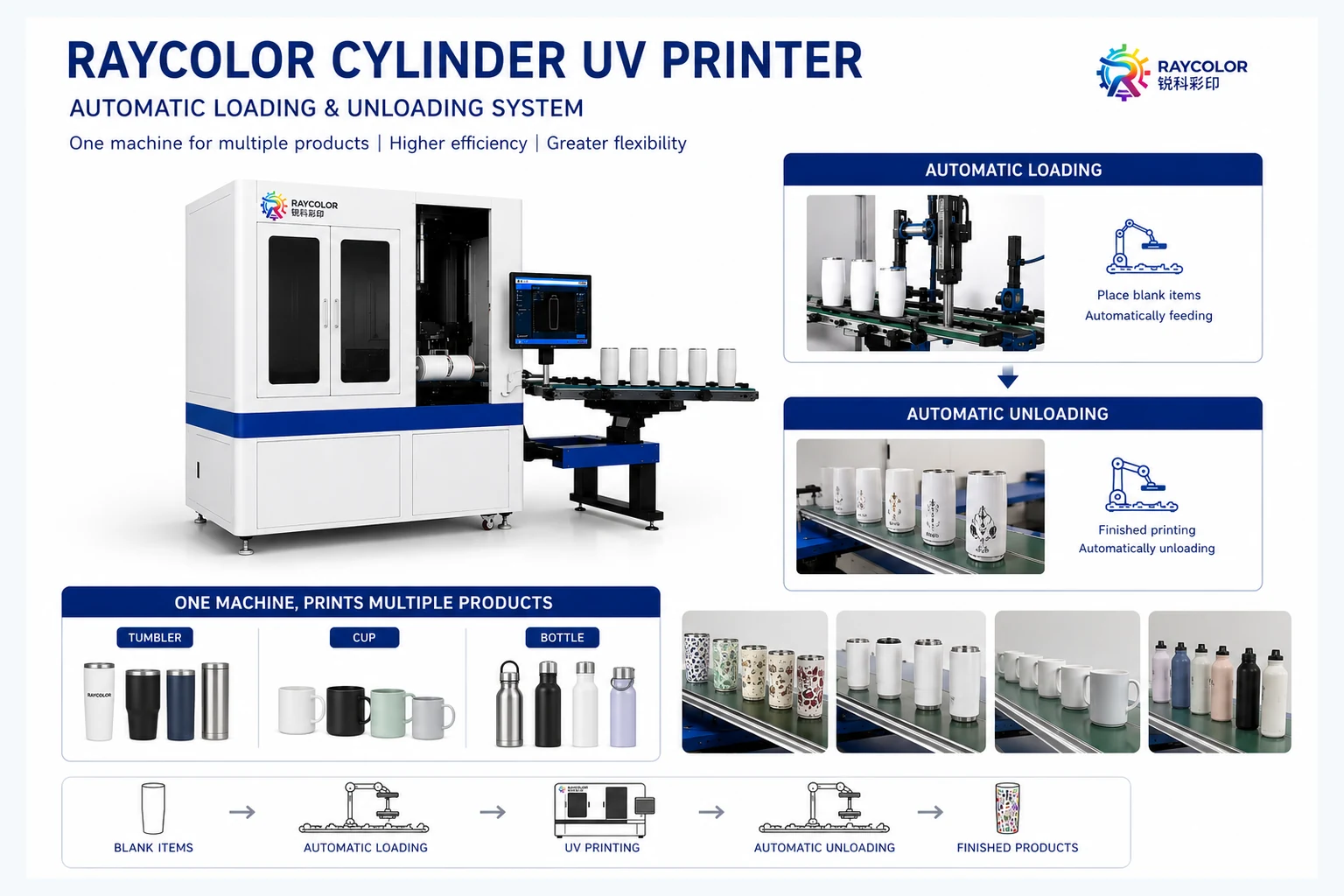
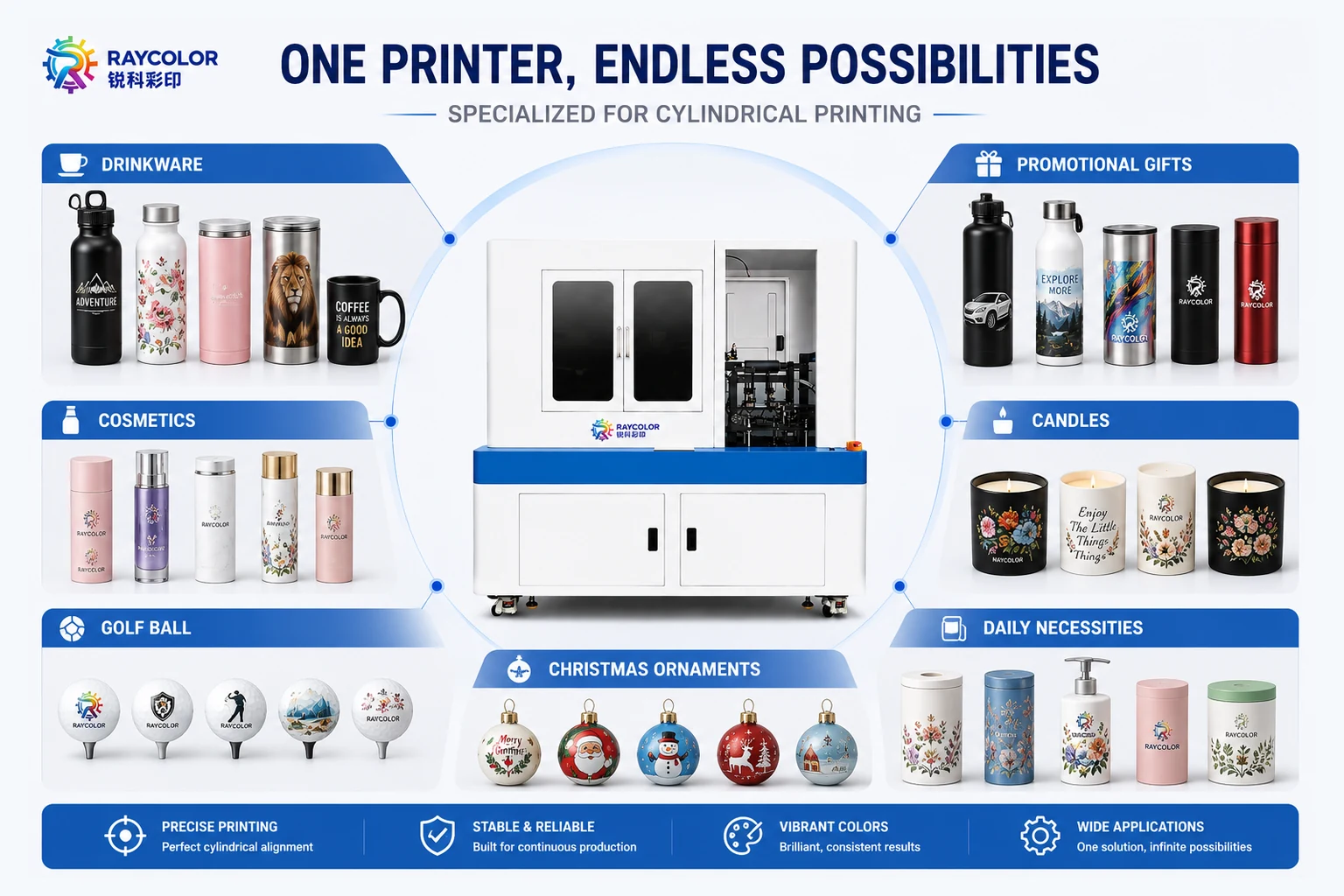
| Typical products | Bottles, tumblers, cups, flasks, cans, candles and selected special shapes | |
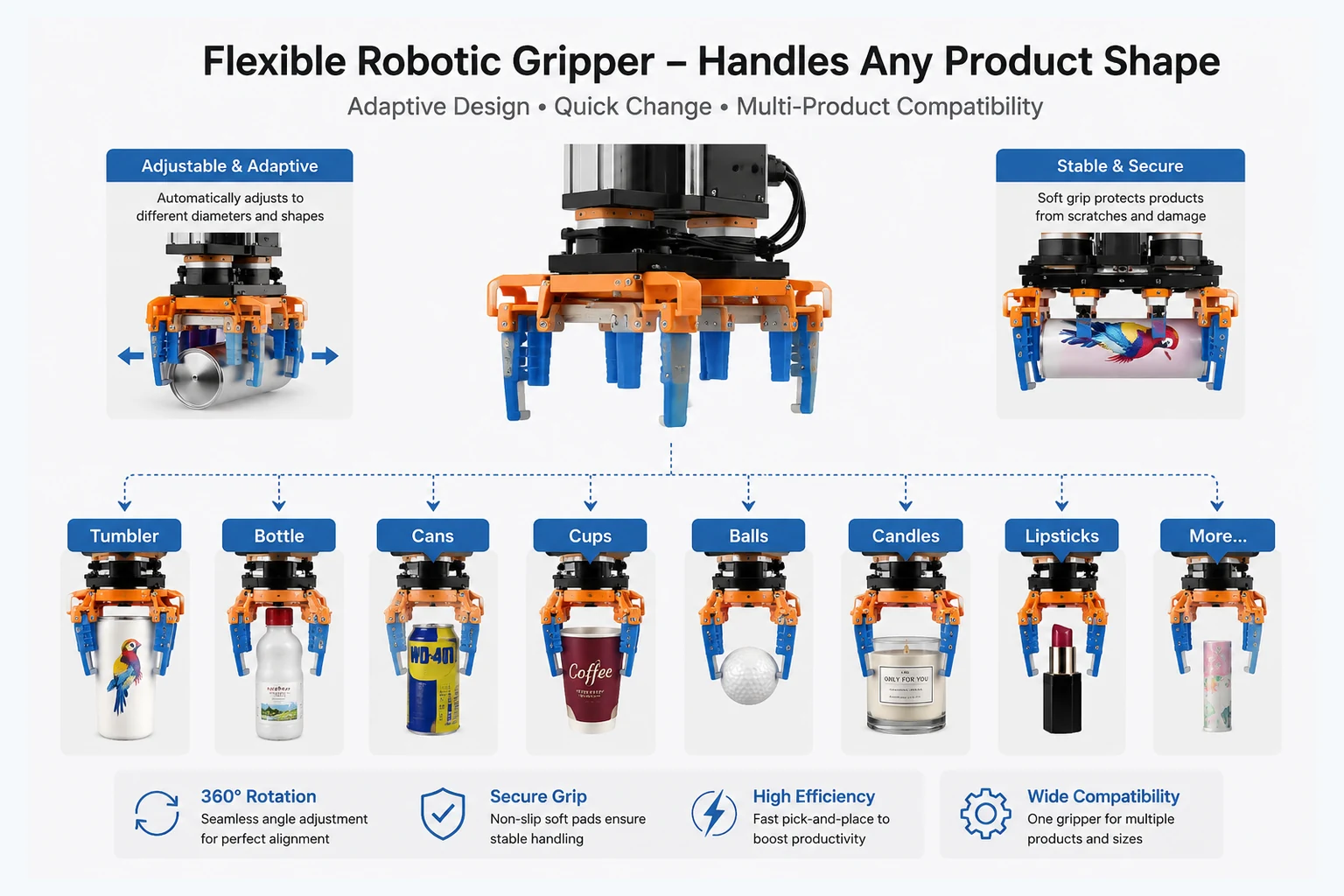
| Automation | Robotic loading and unloading with configurable conveyor layout | |
| Dimensions | Base machine size | 1950 × 870 × 1800 mm |
| Base machine packing size | 2000 × 920 × 2100 mm | |
| Base machine net / gross weight | 450 / 630 kg | |
| Complete line footprint | Customized according to conveyor and robotic handling configuration | |
| Operating Requirements | Power | AC 220/110 V, 10 A, 50 Hz, grounded |
| Temperature | 20-30°C | |
| Humidity | 30-60% | |
| Environment | Clean, low-dust indoor production environment |
Configure the Automation Around Your Products
Share product samples, dimensions, material, artwork coverage, required daily output and preferred loading direction. Raycolor can recommend the printhead quantity, fixture, gripper and conveyor configuration, followed by sample testing before production.
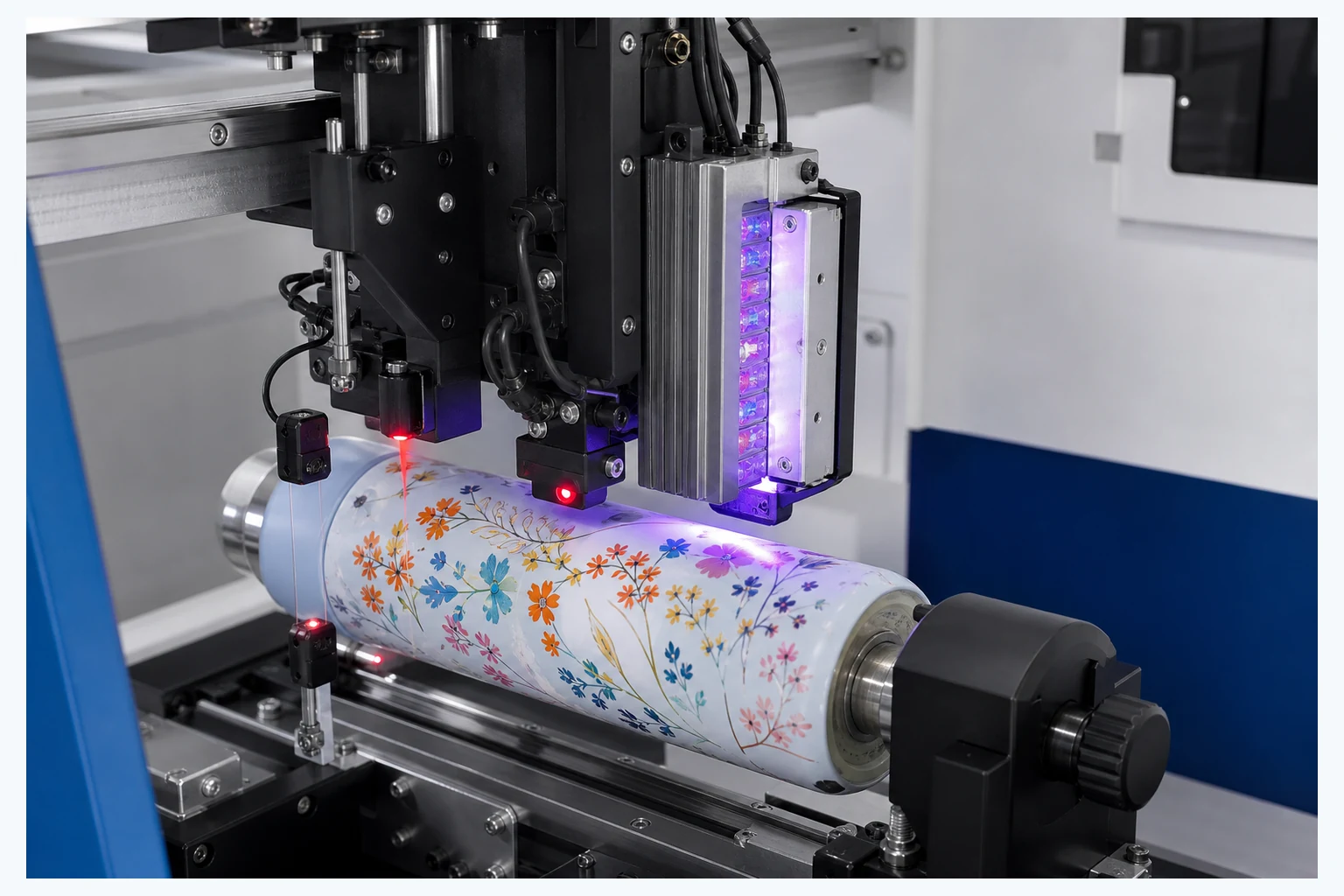
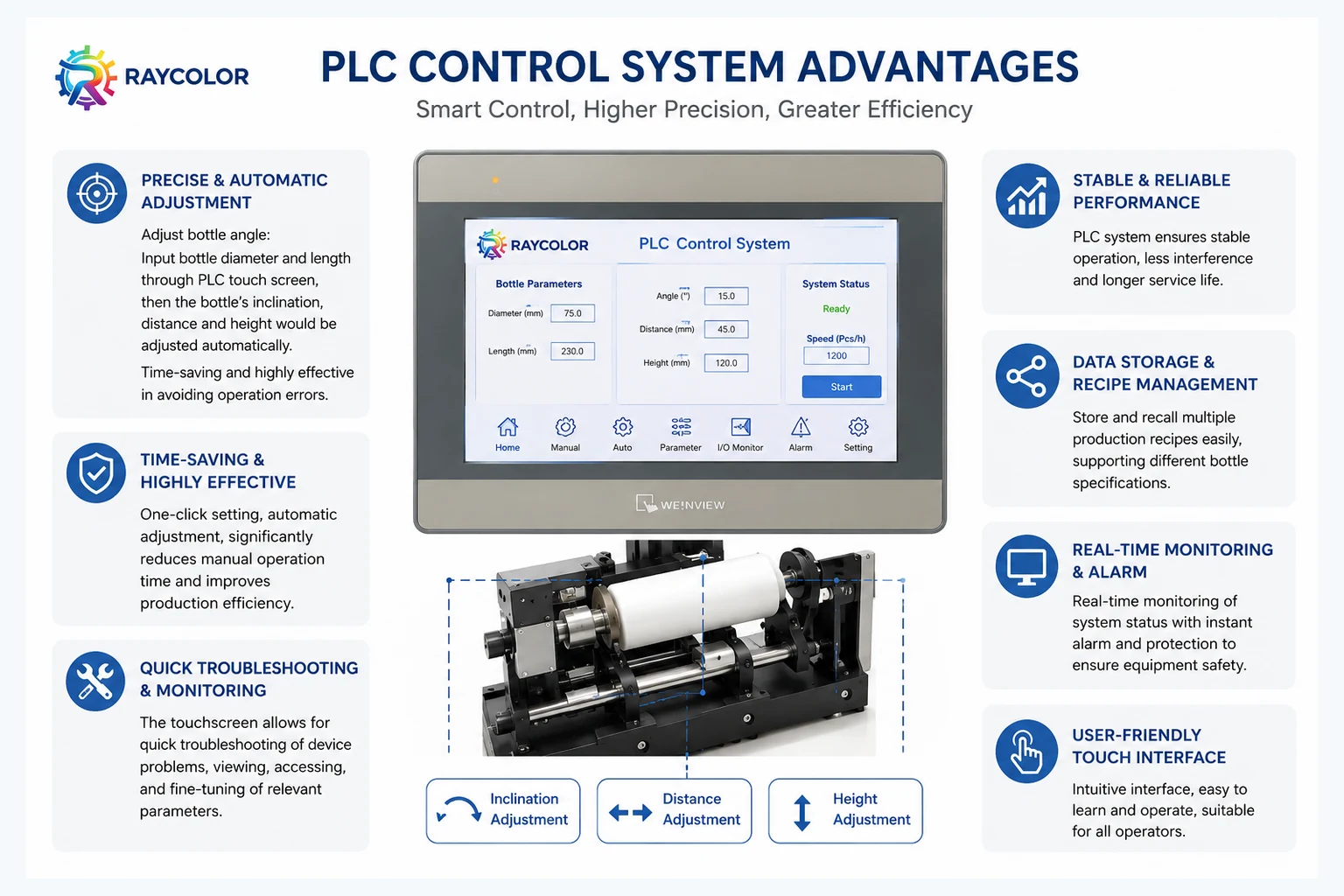
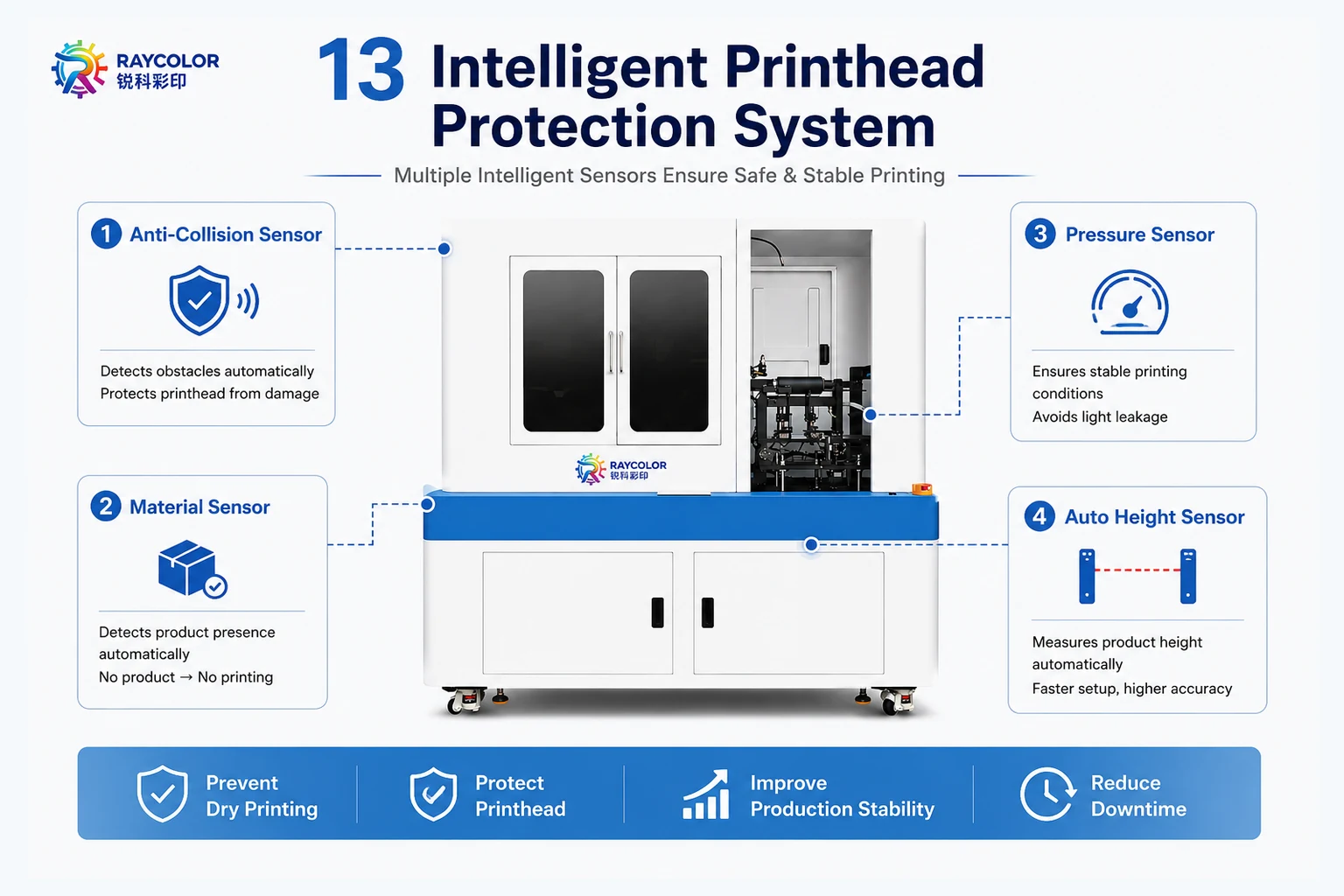
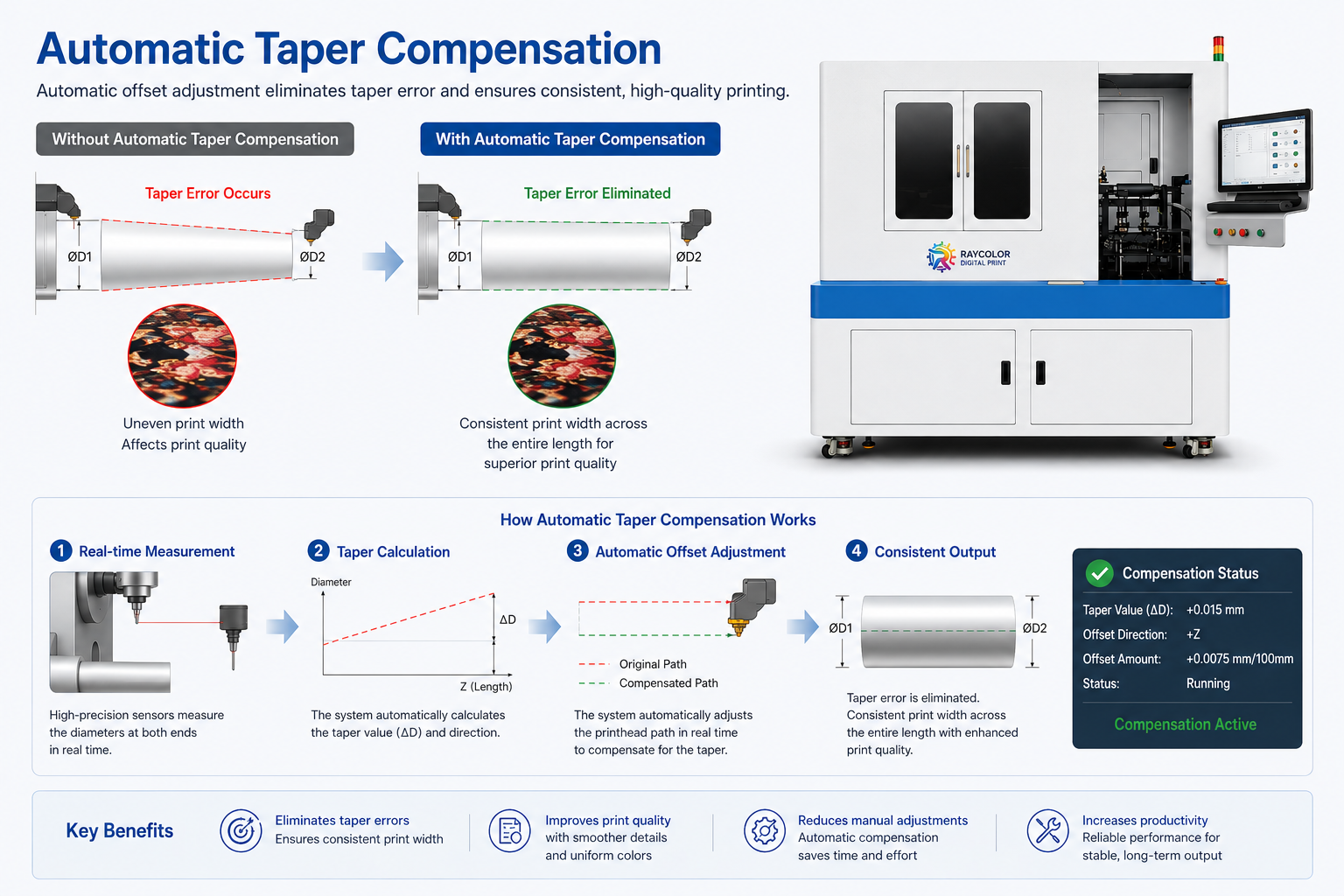
Automatic Loading, Printing and Unloading
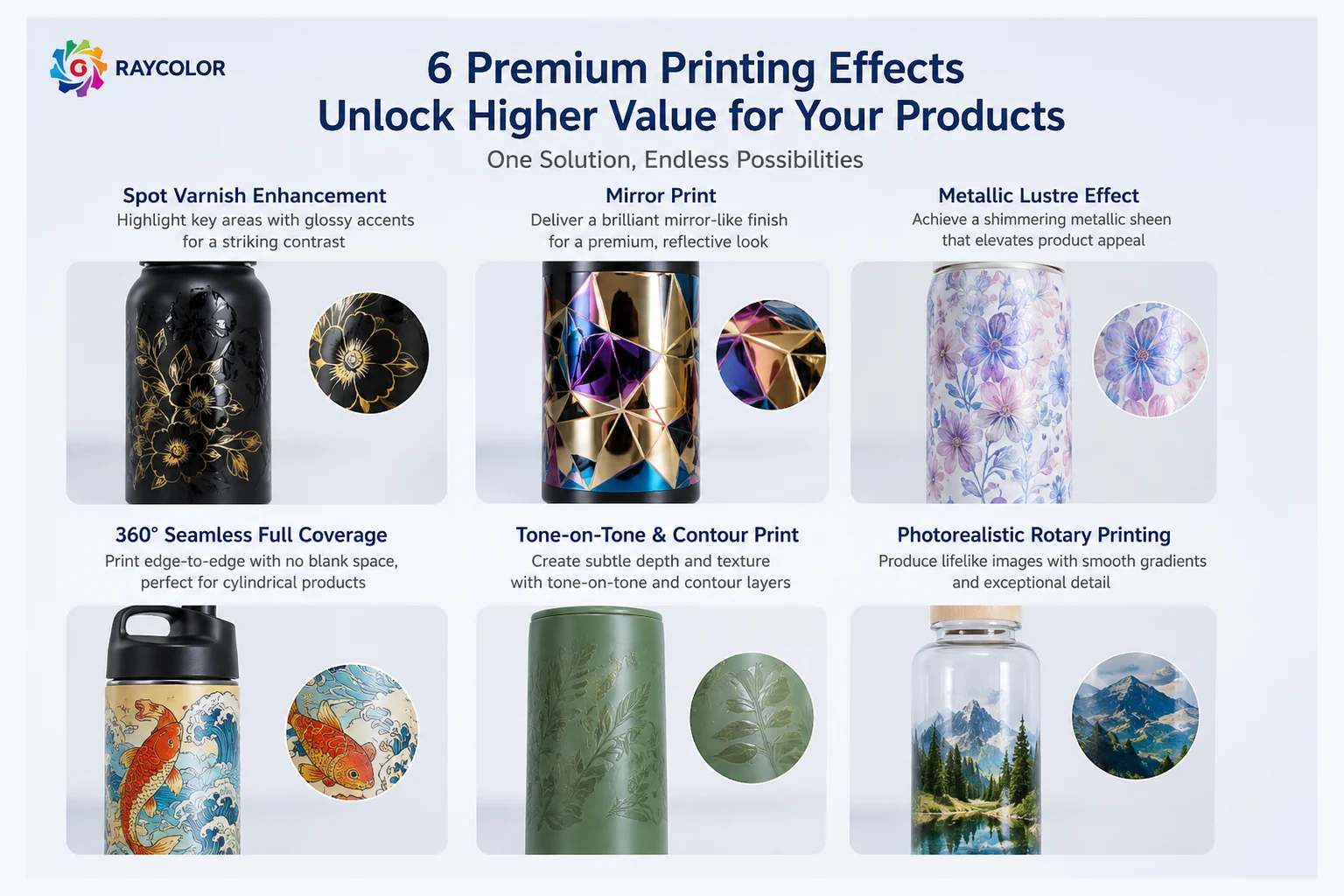
Review the robotic workflow, controls, protection systems, print effects and application range in a consistent high-resolution layout.
Request a Sample Test and Automation Proposal
Automation Buyer FAQ
Automatic Cylinder UV Printer FAQ
Key planning information for factories evaluating robotic loading, printing and unloading. An automatic cylinder UV printer combines industrial printheads with product handling and conveyor controls; see Ricoh’s industrial inkjet printhead overview for technical background. The questions below help determine whether an automatic cylinder UV printer matches the required products and output.
What production is this automatic cylinder printer designed for?
It is intended for repeat, higher-volume production of compatible bottles, tumblers, cans and other cylindrical products where automatic handling can reduce manual loading.
Can the robotic system be adapted to my product?
Product dimensions, weight, material, shape and orientation must be evaluated. Raycolor uses these details and sample tests to confirm the gripper, fixture, conveyor and print configuration.
Does the machine print a full 360-degree image?
Yes. The printing and rotation system is designed for continuous wraparound decoration when the artwork, product geometry and fixture are correctly configured.
How should I estimate production speed?
Output depends on print area, resolution, number of passes, ink layers, product handling and curing requirements. A representative file and sample product are needed for a meaningful cycle-time test.
What support is provided for installation?
The project can include installation planning, remote or on-site commissioning, operator training and ongoing troubleshooting. Exact service scope should be listed in the final quotation.